Dec 30, 2007

Understanding theory means only understanding part of the reality


It is somewhat surprising to hear from an optics physicist that after two thousand years of inquiry, the fundamental question "what is light" still remains. Classical theory describes light as electromagnetic waves, whereas quantum mechanics describes light as particles. The result is what physicists called the duality of light. But obviously not all physicists are satisfied with this duality explanation because of its inherent ambiguity.

The evolution of the understanding of light demonstrates the idea that understanding a theory means only understanding part of the reality, the part of reality that the theory can accurately predict observations.

Image source: xkcd.com

Maths and Music


In an interview on the ethical legacy of Einstein, a theoretical physicist made a very nice analogy between physics and music. He said maths to physicists is as musical scores to musicians. When looking at musical scores, musicians plays the music in their heads. Similar things happen to physicists: when they look at equations, they see the physical images of what those quantities in the equations represent.

Image source: amazon.com

Critical self-assessment 3 -- Projects


Too many things I want to do, but too little time of actually doing them. As a result, I have a long list of projects I have started and a long list of things I want to start: website construction, modeling, type-watching, When Pigs fly, martial art, public speaking, travel, traditional Chinese medicine, humor study, running, soccer, conversation, writing, and recently added to the list, existentialism study, skate, ski.

Solution? The rational approach is to prioritize the projects and to do them in the order of their importances, and of course with proper time management. But this approach doesn't apply to these hobby projects.

Sometimes another approach works better: take whatever I feel like doing at the moment, "Just do it" and enjoy doing it.

Critical Self-assessment 3 -- Research

Slow, always slow. I am in a non-competitive environment that it seems that there is no urge of being the first in doing anything. But whenever this idea comes to my mind, this idea of being slow frightens me, energizes me, and drives me. Perhaps, I need competitors, good competitors.

Critical self-assessment 3 -- relationship

Whenever I travel, I enjoy a lot the freedom of going wherever I want to go and doing whatever I want to do. That's exactly the reason why I prefer not to travel with a group. And then I get this frightening idea that if I were to travel with a girl, I have to compromise my choices. Then even more frightening is that life is like travel. Am I not ready for a relationship yet?

Dec 26, 2007

Critical Self-assessment 3 -- Health

The last thing one would do in a trip is to get sick, that's what I did during my trip to Banff. The day after I got Lake Louise Hostel, I went ice-skating on Lake Louise, and then I got sick. While I was lying on my bed, I got this crazy idea of linking the rate of metabolism with what traditional Chinese medicine call the small furnace in human body. The more vigorously your small furnace burns, the faster the rate of metabolism, and hence the more heat the body generates, and the less susceptible to cold the body is.

This idea of linking metabolism with small furnace in the body, though may not be justifiable scientifically, explains quite a few things happened to me. In cold weather, metabolism slows down, and the small furnace is slowed down too. As a result, my digestions slows down; my body doesn't generate or preserve enough heat, and I get sore knees, sore head. The most annoying symptom is that I cannot do anything but rest after I have food.

This linkage provides me with a solution too. To increase the rate of metabolism in cold weather, the body has to get used to cold weather so that it functions as if it is in normal weather. Early morning running in winter and cold water shower are too possible options. Besides, food with the character of hotness like ginger and cinnamon tea will help me cope with cold weather too.

I am on my way back.

Image source: www-old.cs.st-andrews.ac.uk

The Effect of the Hierarchical Structure of Knowledge on Learning


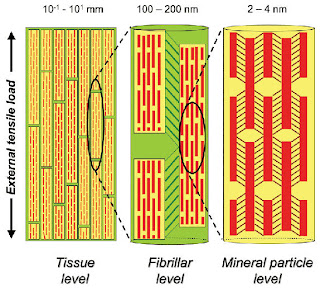
This post is my first attempt to rationalize my understanding of the structure of knowledge. This understanding will provide guidance on what to know, how to know, and why to know a particular subject, especially in self-studying, for I have a tendency to indulge myself in studying whatever I get.

Two observations form the basis of my understanding. First, the volume of knowledge is too huge for any one person to know it all. Second, this vast volume of knowledge is stored in a hierarchical structure. To illustrate the second point, take a look at the table of contents of wikipedia, or simply the disposition of faculties in any comprehensive university, and you will find these three basic divisions: natural science and technology, social science, and arts. And all three major divisions are subdivided into many categories and then subdivided again and again. These divisions and sub-divisions exemplify the hierarchical structure of knowledge.

My first conclusion is that one does NOT NEED to know everything. By everything, I mean every detail of every subject existing on earth. The hierarchical structure of knowledge suggests that a group of details is related to another group of details in the same way. To make an analogy of this point, consider the statement that your uncle's child is your cousin. Whether your cousin is a girl or a boy is an unnecessary detail to determine his/her relationship with you, as long as his/her father is your mother's or father's brother. Knowing more details will give you deeper understanding of a subject. Let us generally state that knowing different levels of details corresponds to different levels of understanding of a particular subject.

Then, in a particular subject, the question what to know becomes the question to which level of details one knows? This question is closely intertwined with the question why to know, which serves as a criterion to eliminate unnecessary details. For example, for general interest, one would take a helicopter view of the subject first to understand its principles before going depth in any of its branches. On the other hand, for the purpose of solving any real-world problem, one needs to identify what is relevant to the problem and must know every possible detail of relevant knowledge.

The process of determining to which level of detail one needs to know is also closely related to the question how to know. Existing knowledge can be obtained through books, journals (both paper and electronic) and direct communication with people who knows, none which is infallible. A good mentor is invaluable for beginners and often largely determined the student’s area of study. However for beginners, it is very hard to judge who is a good mentor and who is not, as it is often the case of judging the quality of a book by only reading the introductory chapter of the book. Peer opinions will give some insights on these matters, but best solution is still hard to find.

The foregoing analysis enables me to address the most practical concern, how to learn things fast. It seems to me that the speed of learning, particularly in self-study, is largely determined by the amount of details one needs to know. Obviously the fewer the details, the faster the learning process. A fair judgment of what levels of detail one needs to know will save you enormous amount of time. (The choice of books, journals and mentors is also critical.)

Therefore, don’t indulge yourself in any seemingly significant details.

Image Credit: http://www.esrf.eu/news/pressreleases/bones/bone-structure.gif

Oct 16, 2007

one paragraph blogging


Don't write too many words in one post. Write concisely, make your point, and omit needless words.

Image Credit: http://www1.istockphoto.com

Oct 6, 2007

Writing Summary for Modern Optics


Use your judgment to select the most important messages in a chapter and put only those points into your summary. For example, in optics, or more generally in physics, the relationship of things is the key concern, so attentions should be on new concepts and how they linked to the old concepts. Maths is just a tool to formalize the reasoning in order to give quantitative prediction.

Image Credit: http://www.tut.fi/

Sep 27, 2007

How to prepare a presentation


How to prepare?
1. Start with an outline, and include all the thoughts you have.
2. Group them into slides
3. Write for each slide what the key point you want to make, and design the animation and highlights according to the points you want to make
4. Write, in full sentences, the beginning and the end
5. Prepare the linking sentences/phrases between each slides
6. Rehearse, rehearse, and rehearse.

Advices from English Language Learning Centers at UofT.

Slide Design

  1. Organize the materials around one take-home message.
  2. Title slide clearly introduces topic and speakers
  3. Title of each slide reflects the main point of the slide
  4. Have one idea per slide, or per click.
  5. Agenda (outline) slide is presentation specific
  6. No Blue on Back or black on Blue fonts
  7. Sans serif fonts of size 20 or bigger
  8. Whenever possible, conceptual diagrams are used to clarify key points
  9. Figures present relevant data clearly and unambiguously
  10. Clear, horizontal labels on all figures
  11. Words are kept to a minimum in favour of images/figures/diagrams.
  12. Words on slides are presented as grammatically parallel bullets rather than sentences
  13. If animation is used, it's used to focus attention not to distract from a slide's main idea
  14. Decide where you want to audience to focus attention, and ensure that that's where the focus goes
  15. Use signposting slides: outline slide, section summary slide and conclusion slide.

Rehearsal

  1. Rehearse and time yourself. (Particularly Rehearse the beginning and the end!)
  2. Use a conversational style!
  3. Signposting during your presentation
  4. If your presentation runs overtime in rehearsal, don't speak faster, CUT Material.
  5. Remember that a presentation is not the same as a report. Like a good abstract, a good presentation should make the audience want to read your report.
  6. Be ruthless about slide inclusion: every slide must earn its keep. (Recall rule 1, organize your material around one take-home message.)
  7. Evaluate the relative length of each part of your presentation, and be sure the most time is spent on the most important section.
  8. You won't be able to present everything you've learned in the time given; you must carefully select specific material to highlight.
  9. Remember the audience has never seen your slides. They'll need time to absorb the ideas presented.
  10. Use hand gestures!
  11. When referring the materials on the screen, use 3Ts: touch, turn and talk.
  12. Look at the audience not the screen.
  13. Anticipate potential questions
  14. rehearse again and time yourself.

Image Credit: http://www.pcweenies.org

Sep 15, 2007

the purpose of group meeting

The purpose of doing group meeting is not only to inform your colleagues what you have done but also to solicit feedbacks from them.

Sep 11, 2007

Growth is a stretching experience

Growth is a stretching experience. You need to constantly challenge your limit!

Areas of knowledge

At least four areas of knowledge are essential to an independent life: health-related, financial, spiritual, and professional.

While keeping the focus on the professional development, you should spend some time on other areas as well.

I could be wrong

Humans are fallible. The idea that I could be wrong will keep you from being overly assertive, and make you always be willing to consider alternative opinions. It is a powerful weapon against the enemy of wisdom, your prejudice.

Sep 4, 2007

Mastering multitask requires adroit switching among different mindsets


In the first week of August when I immersed myself into research, I got my passport back from Consulate-General of Brazil in Toronto with my visa to Brazil ready. I didn't give a thought about the Argentina visa until about one week later when it was already too late to apply for it. Many reasons account for the miss of the opportunity, and I think the main reason is that I fail to switch my mindset.

The preparation for Visa application includes filling the forms, booking the ticket and mailing the application package. All of these can be done in half a day if everything is well planed. But I didn't do it because I couldn't switch my thinking to visa application and my feeling to the travel mood. I miss the chance.

Firmly and adroitly switching among different mindsets will allow you to cope with your life more efficiently. Successful switching will make you concentrate on the task on hand. When eating, I need a mind that fully enjoys its smell, its look and its taste. When doing research, I need a mind that is analytical, critical and logical. When dealing with people, I need a mind that is cheerful, emphatic, and willing to seek understanding. The multi-facets of life necessitates a multi-task mind.

Everyone can switch mindset; it is just a matter of time. But swiftly switching is not easy, especially when emotion is involved. Even though reason tells me that it is better to put off the current task and deal with another task, the impulse of finishing the current one makes me reluctant to switch. And that's where I need to practice.

And how to improve? The difficult thing is not to get new task into my mind. It is how to get the old out that is difficult. A buffer time (a minute or two) between two successive tasks to clear the old might help.

Image Credit: http://www.whiteelephantmortgage.com

Aug 21, 2007

What to bring when travelling

Here is a list of things I found either very handy or essential to my travel in Brazil, in addition to the list I have before:
  • Visa Pin
  • Ginger Candy
  • Medicine (cold, stomach, Liuwei)
  • VC
  • Brazillian Portuguese Phrase Book
  • Local airplane company information through Lonely Planet Travel Guide
  • Sticky note sheets
  • Locks
  • passport
  • Laptop: increasing number of hostels offer wireless access.
  • umbrella
  • slippers (hostel don't offer slippers)

Aug 5, 2007

Being technically independent in research

Being technically independent in research will allow you to act according to your own schedule.

And act fast. Everyone can solve problems, so it is just a matter of who is the first. Examples like Peidong Yang will never fail the motivate you. See what can be done at the same time, what should be done. Plan your research!

Jul 30, 2007

how to judge yourself

Whenever your head gets too hot, you need to cool down. Ask yourself: after what you have achieved, so what? Whenever you win awards, score the highest in a test, or accomplished any other personal goals, and then feel great about yourself, ask yourself: Have I made a contribution to knowledge? Have I made a contribution to others? Thinking in this way will keep you away from narcissism, and prevent the thinking on what you get.

The fundamental question "so what" relates to how you judge yourself. I don't have a clear answer now. But think in terms of "Why you do the things you do" is a good way to search your values within and will make sure for what reason I do it. Besides, being able to answering "so what" every now and then will clear out your vanity.

What motivates you

What motivates you?

Paper, fame, money, external expectation, or dreams, intuitions, love? Where is the motivation?

It seems that it should be something great. I don't know the answer now.

Jul 16, 2007

Increasing your responsibility

From the talk with uncle: becoming a supervisor requires you to share your knowledge willingly, to be sociable, to be able to motivate others, and consequently your responsibility will increase.