Aug 16, 2008

Critical Self-assessment 4 -- Research

In a frenetic move, initiated largely by myself and a little by chance, I lead three projects during the summer and am involved in a fourth project. Thank to an understanding of my personality type, I do not doubt any more about juggling different projects.

Right after I came back from Nanjing, I received from my mentor one paper published in Nano Letters a few days ago, reporting a method almost as same as one of my projects. Even though I know that the right sentiment is to be happy for this scientific advancement, I feel a bit defeated because I wasn't the one to achieve this.

My competitiveness at work drives me in the right direction, but in order not to be driven solely by the desire to win or the fear of defeat, I need something larger than myself, something more meaningful than personal victory. It has to be big and important enough so that I can devote my energy into it and rejoice with others to see its advancement. Alternative energy is one field that is closely related to what I am doing; others are brain imaging, personal genome, and still some others outsides science.

Critical Self-assessment 4 -- Health

For the past eight months, as my health condition becomes better and better, I participated in a series of activities in order to recover my strength and stamina. In the spring semester, I joined Grad House soccer team to compete in the intramural league; in the middle of June, I joined the Taekwondo Academy in Toronto, and I got my first color belt in July.

For me, joining the intramural soccer league is more than just playing; it is the first time since quitting soccer in my sophomore year that I am fit for playing at competitive level again. I scored one goal in our last game, and I consider it my biggest achievement during this half year. Taekwondo is a further effort to discipline myself and increase my endurance and strength. I enjoyed it a lot.

Discipline and practical knowledge of how the body and mind works helped and will continue to help me.

"A life of pleasure makes even the strongest mind frivolous at last."- Edward Bulwer-Lytton

Apr 27, 2008

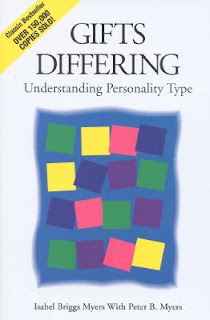
Book Summary: Gifts Differing: End Note

Of all the ideas presented in Gifts differing on understanding oneself, this is the one I like the most:

"With a few people there follows a still further stage, in which the other functions are permitted more development, to compensate for any one-sideness, and the pronounced typical pricture is again modified to some extent by the unfolding of a fuller and richer expression of human nature. "

Regarding understanding others, I like this description the most:

"Sensing types want to solution to be workable, thinkers want it systematic, feeling types want it humanly agreeable, and intuitives want a door left open for growth and improvement. These are all reasonable desires. Given understanding and good will, they should be achievable.

When people differ, a knowledge of type lessens friction and eases strain. In addition, it reveals the value of differences. No one has to be good at everything. By developing individual strengths, guarding against known weaknesses, and appreciating the strengths of the other types, life will be more amusing, more interesting, and more of a daily adventure than it could possibly be if everyone were alike."

It took me almost a year to finish reading this book, and I've felt strongly the urge to move on. As mentioned in the introduction, the beauty of this theory is its nonjudgmental view on personality, so it offers an unbiased view to understand people. However, since personality is only part of what makes a person unique, understanding a personal requires much more than just understanding of his/her type.

Furthermore, the type theory doesn't account for the difference in culture, religion and other factors that contribute to the spiritual aspects of life, so its description on personal values only stays at surface level.

Also worth noticing is that though the theory is nonjudgmental on personality, we do need judgment on people whenever a decision related to people is made. The author also acknowledge the pivotal importance of judgment, and report that judgment is most difficult to develop.

One final note, the personality theory doesn't account for everything in human difference, but it does provide us a glimpse of the seemingly incomprehensible variety of human natures.

Book Summary: Gifts Differing: Part 5 Type and Marriage

Among 375 couples married between 1910 and 1950:

Alike on all preferences: 9%
Alike on three: 35%
Alike on two: 33%
Alike on one: 19%
Alike on none: 4%

The most frequent similarity was on SN, which suggests that seeing the things the same way, ...

Among the couples who were different on all preferences, nearly all the husbands were thinkers.

Understanding, appreciation, and respect make a lifelong marriage possible and good.

Even the best of qualities tend to have inconvenient side effects, which may annoy those who do not see the reason for them, but the side effects are trivial in comparison with the good qualities from which they spring.

When I was a child we had a neighbor who complained a great deal about her husband's faults. One day my mother asked her what she would really like to have changed in him. It took her some time to find an answer. Finally she said, "You know, there's that deep scar on his cheek. It doesn't bother me, but it bothers him."

Likeness on TF should be hardest to achieve because there are more feeling women than thinking women in our culture, and more thinking men than feeling men...

they can acknowledge that each is justifiably and interestingly different from the other---and be amused. Their amusement may be warm or detached, wry or tender, according to their types, but it will help in working out the situation and keeping intact each partner's dignity and the precious fabric of their marriage.
-- Gifts Differing

Absolutely no experience, so only quote what's interesting to me.

Book Summary: Gifts Differing: Part 4 Type and Occupation

  1. Accountants:64% ST; 23% SF; 4% NF; 9% NT;
  2. Bank employees:47% ST; 24% SF; 11% NF; 18% NT;
  3. Sales, customer relations:11% ST; 81% SF; 8% NF; 0% NT;
  4. Creative writers:12% ST; 0% SF; 65% NF; 23% NT;
  5. Research Scientists:0% ST; 0% SF; 23% NF; 77% NT;
--Gifts Differing

Much of what I have learned from books, speeches and workshops on career choice can be summarized into this one idea: an ideal career enables one to use his best skills to do what he values the most. Personality plays a role in career choice by shaping one's interests, values and skills. The above quoted data prove exactly this point. For example, the S types, who prefers the concrete and facts occupy a high percentage of accountants and bank employees; by contrast, none of the S types shows up in research scientists, who deal with theories and the possibilities. By similar analysis, it's no surprise that sales people are dominantly SF type. Also, creative writers, who sees possibilities more than facts, are mostly N types.

E/I preference and J/P preference also influences one's job choice. We would expect that I types favors quiet workplace while E types loves the opposite; J types enjoys planning well ahead while P types prefers to response to what requires the attention at the moment.

This type theory was originally developed to guide one's career choice, so a lot more can be said about one's type and occupations. Not to bore you with all those detailed descriptions, I will simply stop here with one important reminder from I.B. Myers: "People should not be discouraged from pursuing an occupation because they are 'not the type'......they may be valuable as contributors of abilities that are rare among their co-workers."

Apr 20, 2008

Book Summary: Gifts Differeing: Part 3 Type and Learning

THE MOST CONSPICUOUS relationship between type and education lies in the apparent advantage enjoyed by intuitives in most academic fields. They gravitate into higher education...

-- Gifts Differing

Words, being symbols, are abstract. The translation of words into meaning is therefore easier for intuitive type children than for sensing type children. And consequently, intuition type children enjoys schools more. One way to help sensing type student is to introduce the sound-symbol relationship explicitly early in school.

The type theory states that the sensing type students prefer actuality and facts, whereas the intuitive type students prefers abstract and theory. In other words, their interests are different. And because interest is the vital driving force of learning, sensing type students and intuitive type students tend to focus their attention on different subjects. It is no surprise that the majority of science and liberal arts students are of N type, and the majority of finance and commerce students are of S type.

The difference between S and N type students presents a challenge to teachers. Any subject is a combination of facts and theory, and the way a teacher presents a subject is likely to bore half of the audience half of the time. One way to get around this problem is to create interests in all students about both the facts and the theory, which is by no means an easy task.

Feb 24, 2008

Book Summary: Gifts Differing: Part 2 Type Dynamics and Growing-up

"...sensing to gather the relevant facts, intuition to see all measures that might usefully be taken, thinking to determine the consequences, and feeling to consider the impact of these consequences on the people involved. The pooling of their respective perceptions and judgments offers the best chance of finding a solution valid for them both."

"...Sensing types want the solution to be workable, thinkers want it systematic, feeling types want it humanly agreeable, and intuitives want a door left open for growth and improvement."

-- Gifts Differing

Myerses endorse Van der Hoop's description of the three stages of type developments. The first stage is the beginning of the differentiation of a prevailing process, be it sensing, intuition, thinking or feeling. At the second stage, the prevailing process dominates, and the rest processes are suppressed in order for the dominant process to reach its full development. For a few people, there is a last stage, in which previously suppressed processes are permitted to develop, thereby unfolding "a fuller and richer expression of human nature".

Van der Hoop's description of the three stages does not include the ages these stages occur. And I think for people like me who have already graduated from college, the last stage is where efforts should be, and that's where this post will focus on.

It is always enlightening, sometimes annoying, and every once in a while amusing and entertaining to see people act unconsciously according to their types. However, the last stage of type development requires CONSCIOUSLY exercising what people are not good at, and as Myerses put it "The recognition that one process is more appropriate than another in a given situation is an important milestone in type development." One not only needs to first see the difference among the four processes and realize the merits of each one of them, but also needs to be aware of which process he/she is using at a given time. For example, "Gosh, it is freezing cold out there" is a sensing perception, and "I'd better not to go outside" is a thinking judgment, and "Only if I had a car" is a intuitive perception, and "I'd better still go, otherwise my friends will keep waiting" is a feeling judgment.

In order to practice the less developed processes during the last stage of type development, Myerses suggest to use problems encountered in life to develop those skills. All the four processes have to be used, and have to be used in the following sequence, in order to arrive at a good solution.

"When confronted by a problem to solve, a decision to make, or a situation to deal with, try exercising one process at a time, consciously and purposefully, each in its own field, without interference from other processes, and in the following order:

  • Sensing to face the facts, to be realistic, to find exactly what the situation is and what is being done about it. Sensing can help you avoid wishful thinking or sentiment that may obscure the realities. To activate your sensing process, consider how the situation would look to a wise, impartial bystander.

  • Intuition to discover all the possibilities—all the ways in which you might change the situation, your approach, or other people’s attitudes. Try to put aside your natural assumption that you have been doing the obviously right thing.

  • Thinking to impersonally analyze cause and effect, including all the consequences of the alternative solutions, pleasant and unpleasant, those that weigh for and those that weigh against your preferred solution. Consider the full costs involved and examine misgivings you may have suppressed because of loyalty to someone, liking for something, or reluctance to change your stand.

  • Feeling to weigh how deeply you care about the things that will be gained or lost by each of the alternatives. In making a fresh appraisal, try not to let the temporary outweigh the permanent, however agreeable or disagreeable the immediate prospect may be. Consider as well other people’s feelings, reasonable and unreasonable, about the various outcomes, and include your feelings and theirs among the facts to be considering n deciding which solution will work best.

The final decision will have sounder basis than usual, because of your consideration of facts, possibilities, consequences, and human values. "

Though Myerses put the dynamics of type development at the end of the book, I move it ahead because this dynamic view of types opens the door to personal growth over a life time, thus preventing any deterministic misinterpretation.

Feb 10, 2008

Book summary: Gifts Differeing : Part 1 Theory

Myers-Briggs personality type theory describes sixteen personality types using four dichotomies: Sensing(S)/iNtuition(N), Thinking(T)/Feeling(F), Extraversion(E)/Introversion(I), and Perceiving(P)/Judging(J). The FIRST four of the eight characteristics are based on the seemingly self-evident difference of how human mind functions, and each person has one, and one only, dominant process and one auxiliary process among these four characteristics, namely S, N, T and F.

The first dichotomy Sensing/iNtuition is about the preferred way one's mind gathers information. S type person prefers gathering information directly through five senses: Smelling, seeing, tasting, hearing, and touching. On the other hand, N type person prefers gathering information through “indirect perception by way of the unconscious, incorporating ideas or associations that the unconscious tacks on to perceptions coming from outside”. This fundamental difference in the preferred way of gathering information, or in perceiving, creates a basic easily observable difference: S type person favors actuality, facts, and present, whereas N type person favors possibility, abstracts, and future.

The second dichotomy Thinking/Feeling is about the preferred way one's mind makes decisions. Thinking type (T type) person prefers arriving at conclusion through objective, impersonal, logic means, whereas feeling type (F type) person prefers personal and subjective approaches. Myerses put the difference between T and F types in an ingenious way: “a reader who considers first whether they (the theory) are consistent and logical is using thinking judgment. A reader who is conscious first that the ideas are pleasing or displeasing, supporting or threatening ideas already prized, is using feeling judgment”. Ordinary people do use both way of judging, but each of us PREFERS one of them to the other.

The third dichotomy Extraversion/Introversion describes whether the person focuses on external world of people and things or internal world of concepts and ideas. Normal people deal with both external and internal world, but only one is their focus. And the final dichotomy Perceiving/Judging is about preferred way one deals with the outside world. People have to use both perception (S and N) and judgment (T and F) to deal with the outer world, but cannot use both at the same time. Those who are more curious are usually more comfortable with perception attitude, whereas those who are more decisive are usually more at home with judgment attitude.

Out of the four basic functions of mind (S, N, T and F), only one is dominant for each person. The dominance is developed through exercising the favored function from the moment of birth. Because the use of one function requires the shut-down of all the other processes, the dominant function develops at the expenses of the other function. However, one auxiliary process must be developed to give balance in a person’s life. If the dominant process is a judging one, the auxiliary process is a perceptive one, and vice versa. The role of auxiliary process is to provide balance between judgment and perception. If a person doesn’t develop adequately the auxiliary process, their lives are unbalanced. Myers put it this way: “An extreme perceptive with no judgment is all sail and no rudder. An extreme judging type with no perception is all form and no content.”

Up to now, the post has outlined the most salient features of Myers-Briggs personality type theory. However, several interesting but less important aspects of the theory, such as the balance between extraversion and introversion, and the shadowy side, have been omitted to keep the length of this post readable.

The most intriguing aspect about a theory is its application/prediction to real life. And it is what will come next.

Jan 29, 2008

Book Summary: Gifts Differing: Introduction


"For many Extraverts, 'hell at a party' is 'not being able to get in'. Many introverts see it as 'being there.'
...
I cherish a personal conviction that much of the nonphysical pain and stress in our world is the result of misunderstandings among generally well-intentioned people and is not occasioned by irreparable disagreements."
--Peter Briggs Myers, co-author of Gifts Differing.

In my first fall in Toronto, I was puzzled by the question what I should do in my life, and frustrated by how little progress I have made in answering that question. A workshop offered by career center titled "Career Choice and Your Personality" caught my eyes, so I went to the workshop and learned about Myers-Briggs personality type. From then on, I became more and more interested in this personalty type theory, not only because it helps me know more about myself, offering perspectives that I have never thought before, but also because it helps me understand more about other people, especially those people that are totally different from me.

The type theory derives from the seemingly obvious observations of how the mind works: It perceives to collect informations; it judges to make decisions. By dividing the ways we perceive into sensing(S) and intuition(N) and the ways we make decisions into thinking (T) and feeling (F), it arrives at four basic traits of personalty: sensing/intuition and thinking/feeling. Adding two other dichotomies, Extroversion/Introversion and Judging/Perceiving, completes the description of types.

The book, Gifts Differing, has been the "preeminent source" for understanding the theory. Besides its authoritative explanation of the theory, it also provides valuable applications of the theory to issues such as occupation, marriage, learning, and growing-up. Consequently, my summary will be divided into five parts, with the first part explaining the theory and the rest four parts on applications.

The beauty of Myers-Briggs Type theory is its non-judgmental way of knowing oneself as well as understanding others, as you will see soon.

Dec 30, 2007

Understanding theory means only understanding part of the reality


It is somewhat surprising to hear from an optics physicist that after two thousand years of inquiry, the fundamental question "what is light" still remains. Classical theory describes light as electromagnetic waves, whereas quantum mechanics describes light as particles. The result is what physicists called the duality of light. But obviously not all physicists are satisfied with this duality explanation because of its inherent ambiguity.

The evolution of the understanding of light demonstrates the idea that understanding a theory means only understanding part of the reality, the part of reality that the theory can accurately predict observations.

Image source: xkcd.com

Maths and Music


In an interview on the ethical legacy of Einstein, a theoretical physicist made a very nice analogy between physics and music. He said maths to physicists is as musical scores to musicians. When looking at musical scores, musicians plays the music in their heads. Similar things happen to physicists: when they look at equations, they see the physical images of what those quantities in the equations represent.

Image source: amazon.com

Critical self-assessment 3 -- Projects


Too many things I want to do, but too little time of actually doing them. As a result, I have a long list of projects I have started and a long list of things I want to start: website construction, modeling, type-watching, When Pigs fly, martial art, public speaking, travel, traditional Chinese medicine, humor study, running, soccer, conversation, writing, and recently added to the list, existentialism study, skate, ski.

Solution? The rational approach is to prioritize the projects and to do them in the order of their importances, and of course with proper time management. But this approach doesn't apply to these hobby projects.

Sometimes another approach works better: take whatever I feel like doing at the moment, "Just do it" and enjoy doing it.

Critical Self-assessment 3 -- Research

Slow, always slow. I am in a non-competitive environment that it seems that there is no urge of being the first in doing anything. But whenever this idea comes to my mind, this idea of being slow frightens me, energizes me, and drives me. Perhaps, I need competitors, good competitors.

Critical self-assessment 3 -- relationship

Whenever I travel, I enjoy a lot the freedom of going wherever I want to go and doing whatever I want to do. That's exactly the reason why I prefer not to travel with a group. And then I get this frightening idea that if I were to travel with a girl, I have to compromise my choices. Then even more frightening is that life is like travel. Am I not ready for a relationship yet?

Dec 26, 2007

Critical Self-assessment 3 -- Health

The last thing one would do in a trip is to get sick, that's what I did during my trip to Banff. The day after I got Lake Louise Hostel, I went ice-skating on Lake Louise, and then I got sick. While I was lying on my bed, I got this crazy idea of linking the rate of metabolism with what traditional Chinese medicine call the small furnace in human body. The more vigorously your small furnace burns, the faster the rate of metabolism, and hence the more heat the body generates, and the less susceptible to cold the body is.

This idea of linking metabolism with small furnace in the body, though may not be justifiable scientifically, explains quite a few things happened to me. In cold weather, metabolism slows down, and the small furnace is slowed down too. As a result, my digestions slows down; my body doesn't generate or preserve enough heat, and I get sore knees, sore head. The most annoying symptom is that I cannot do anything but rest after I have food.

This linkage provides me with a solution too. To increase the rate of metabolism in cold weather, the body has to get used to cold weather so that it functions as if it is in normal weather. Early morning running in winter and cold water shower are too possible options. Besides, food with the character of hotness like ginger and cinnamon tea will help me cope with cold weather too.

I am on my way back.

Image source: www-old.cs.st-andrews.ac.uk

The Effect of the Hierarchical Structure of Knowledge on Learning


This post is my first attempt to rationalize my understanding of the structure of knowledge. This understanding will provide guidance on what to know, how to know, and why to know a particular subject, especially in self-studying, for I have a tendency to indulge myself in studying whatever I get.

Two observations form the basis of my understanding. First, the volume of knowledge is too huge for any one person to know it all. Second, this vast volume of knowledge is stored in a hierarchical structure. To illustrate the second point, take a look at the table of contents of wikipedia, or simply the disposition of faculties in any comprehensive university, and you will find these three basic divisions: natural science and technology, social science, and arts. And all three major divisions are subdivided into many categories and then subdivided again and again. These divisions and sub-divisions exemplify the hierarchical structure of knowledge.

My first conclusion is that one does NOT NEED to know everything. By everything, I mean every detail of every subject existing on earth. The hierarchical structure of knowledge suggests that a group of details is related to another group of details in the same way. To make an analogy of this point, consider the statement that your uncle's child is your cousin. Whether your cousin is a girl or a boy is an unnecessary detail to determine his/her relationship with you, as long as his/her father is your mother's or father's brother. Knowing more details will give you deeper understanding of a subject. Let us generally state that knowing different levels of details corresponds to different levels of understanding of a particular subject.

Then, in a particular subject, the question what to know becomes the question to which level of details one knows? This question is closely intertwined with the question why to know, which serves as a criterion to eliminate unnecessary details. For example, for general interest, one would take a helicopter view of the subject first to understand its principles before going depth in any of its branches. On the other hand, for the purpose of solving any real-world problem, one needs to identify what is relevant to the problem and must know every possible detail of relevant knowledge.

The process of determining to which level of detail one needs to know is also closely related to the question how to know. Existing knowledge can be obtained through books, journals (both paper and electronic) and direct communication with people who knows, none which is infallible. A good mentor is invaluable for beginners and often largely determined the student’s area of study. However for beginners, it is very hard to judge who is a good mentor and who is not, as it is often the case of judging the quality of a book by only reading the introductory chapter of the book. Peer opinions will give some insights on these matters, but best solution is still hard to find.

The foregoing analysis enables me to address the most practical concern, how to learn things fast. It seems to me that the speed of learning, particularly in self-study, is largely determined by the amount of details one needs to know. Obviously the fewer the details, the faster the learning process. A fair judgment of what levels of detail one needs to know will save you enormous amount of time. (The choice of books, journals and mentors is also critical.)

Therefore, don’t indulge yourself in any seemingly significant details.

Image Credit: http://www.esrf.eu/news/pressreleases/bones/bone-structure.gif

Oct 16, 2007

one paragraph blogging


Don't write too many words in one post. Write concisely, make your point, and omit needless words.

Image Credit: http://www1.istockphoto.com

Oct 6, 2007

Writing Summary for Modern Optics


Use your judgment to select the most important messages in a chapter and put only those points into your summary. For example, in optics, or more generally in physics, the relationship of things is the key concern, so attentions should be on new concepts and how they linked to the old concepts. Maths is just a tool to formalize the reasoning in order to give quantitative prediction.

Image Credit: http://www.tut.fi/

Sep 27, 2007

How to prepare a presentation


How to prepare?
1. Start with an outline, and include all the thoughts you have.
2. Group them into slides
3. Write for each slide what the key point you want to make, and design the animation and highlights according to the points you want to make
4. Write, in full sentences, the beginning and the end
5. Prepare the linking sentences/phrases between each slides
6. Rehearse, rehearse, and rehearse.

Advices from English Language Learning Centers at UofT.

Slide Design

  1. Organize the materials around one take-home message.
  2. Title slide clearly introduces topic and speakers
  3. Title of each slide reflects the main point of the slide
  4. Have one idea per slide, or per click.
  5. Agenda (outline) slide is presentation specific
  6. No Blue on Back or black on Blue fonts
  7. Sans serif fonts of size 20 or bigger
  8. Whenever possible, conceptual diagrams are used to clarify key points
  9. Figures present relevant data clearly and unambiguously
  10. Clear, horizontal labels on all figures
  11. Words are kept to a minimum in favour of images/figures/diagrams.
  12. Words on slides are presented as grammatically parallel bullets rather than sentences
  13. If animation is used, it's used to focus attention not to distract from a slide's main idea
  14. Decide where you want to audience to focus attention, and ensure that that's where the focus goes
  15. Use signposting slides: outline slide, section summary slide and conclusion slide.

Rehearsal

  1. Rehearse and time yourself. (Particularly Rehearse the beginning and the end!)
  2. Use a conversational style!
  3. Signposting during your presentation
  4. If your presentation runs overtime in rehearsal, don't speak faster, CUT Material.
  5. Remember that a presentation is not the same as a report. Like a good abstract, a good presentation should make the audience want to read your report.
  6. Be ruthless about slide inclusion: every slide must earn its keep. (Recall rule 1, organize your material around one take-home message.)
  7. Evaluate the relative length of each part of your presentation, and be sure the most time is spent on the most important section.
  8. You won't be able to present everything you've learned in the time given; you must carefully select specific material to highlight.
  9. Remember the audience has never seen your slides. They'll need time to absorb the ideas presented.
  10. Use hand gestures!
  11. When referring the materials on the screen, use 3Ts: touch, turn and talk.
  12. Look at the audience not the screen.
  13. Anticipate potential questions
  14. rehearse again and time yourself.

Image Credit: http://www.pcweenies.org

Sep 15, 2007

the purpose of group meeting

The purpose of doing group meeting is not only to inform your colleagues what you have done but also to solicit feedbacks from them.